Antique Music Box with Hand-Painted Porcelain Lid and Ornate Metalwork, c. 1890–1915
Viridian Eclection


The Piece A finely crafted antique music box featuring an ornate cast metal body adorned with raised floral and scroll motifs, topped with a hand-painted porcelain lid. Small in scale but rich in d...
The Piece
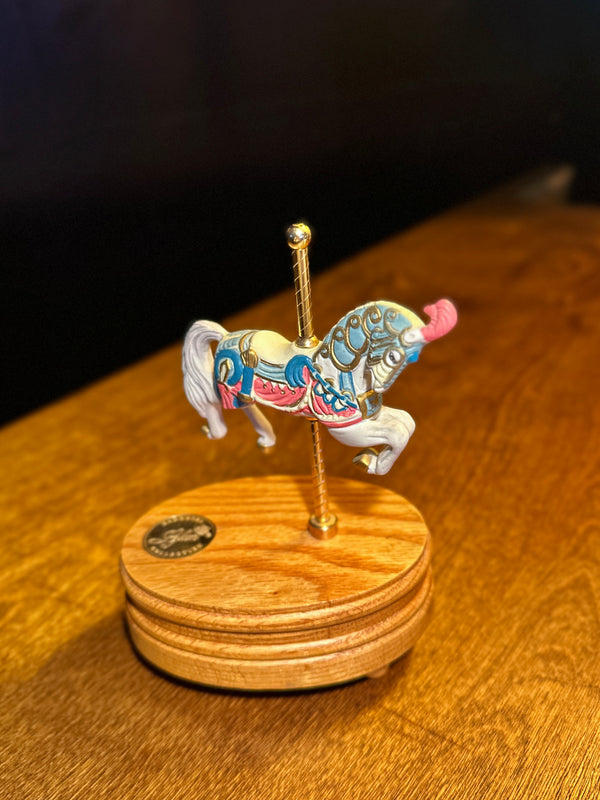
A finely crafted antique music box featuring an ornate cast metal body adorned with raised floral and scroll motifs, topped with a hand-painted porcelain lid. Small in scale but rich in detail, this piece reflects the decorative sensibilities of the late 19th and early 20th centuries, when even utilitarian objects were treated as opportunities for beauty.
The porcelain lid is delicately painted with a romantic pastoral scene, framed by a raised metal surround embellished with scrolling foliage and rose motifs. When closed, the box reads as a sculptural object; when opened, it reveals a softly lined interior designed to protect small treasures.
This is a piece made to be handled, opened, and kept close.
Design & Construction
→ Cast metal body with ornate floral and scroll relief
→ Hand-painted porcelain lid with pastoral scene
→ Raised decorative metal frame around ceramic panel
→ Hinged lid with fitted interior lining
→ Integrated music mechanism
The metalwork displays fine detail and depth, with softened edges and patina consistent with age. The porcelain panel is smoothly glazed, with gentle tonal variation characteristic of hand-painted ceramic work rather than transfer printing.
Music Mechanism
The box retains its original wind-up music mechanism. When engaged, it plays with a soft, nostalgic tone appropriate to its size and age. As with many antique music boxes, the sound is intimate rather than loud—meant for private enjoyment rather than performance.
Historical Context
Music boxes of this type were popular household objects during the late Victorian and Edwardian periods, often given as gifts or used to store personal keepsakes. The combination of porcelain and decorative metalwork placed these boxes above purely utilitarian storage, aligning them with vanity items, dressing tables, and sentimental objects.
Scenes like the one painted on the lid—romantic, pastoral, and softly colored—reflect the period’s fascination with idealized domestic life and classical themes.
Condition
Very good antique condition, consistent with age.
→ Porcelain lid intact with no visible cracks or repairs
→ Painted scene well preserved
→ Metal body structurally sound with age-appropriate patina
→ Music mechanism present and functional
→ Interior lining intact
Minor surface wear is present throughout and contributes to the box’s authenticity.
Why It Belongs in Your Home
This is a piece meant for quiet moments.
It belongs on a vanity, a bedside table, or within a collection of small decorative objects where its details can be appreciated up close. It invites touch, curiosity, and a sense of continuity—an object that has already lived a life of intimacy and care.
For collectors of small antiques, music boxes, or decorative arts, this piece offers both charm and substance.
Details
→ Origin: Likely European
→ Estimated Date: c. 1890–1915
→ Materials: Cast metal, hand-painted porcelain, fabric lining
→ Decoration: Floral metalwork and pastoral porcelain scene
→ Mechanism: Wind-up music box
→ One-of-a-kind antique object
Every piece is packed with professional-grade materials: multiple foam layers, double-boxing, directional and fragile handling labels. For large furniture we use custom timber crating. We photograph packing before dispatch and can provide images on request.
White-glove delivery is complimentary within 100 miles of Reno, NV. National shipping quotes provided at checkout. All shipments are photographed and documented. Damage claims must be filed with the carrier; we provide all documentation needed to support your claim.
Local pickup is available at Viridian HQ (Reno, NV) with 2–4 days notice. Contact us to arrange. Private viewings also available.
All antique and vintage items are sold as described and all sales are final. Each listing includes detailed condition notes and photographs so you can make a fully informed decision. We encourage buyers to ask questions — about condition, dimensions, finish, provenance — before purchasing.
Antiques are irreplaceable and one-of-a-kind. Carrier handling is outside our control once a piece has left our facility, and major carriers including FedEx do not insure antiques. We do everything within our power to ensure safe transit, but cannot accept liability for carrier damage. If damage occurs in transit, we will provide full documentation to support your carrier claim.
Have a question? — we're happy to provide additional photos, condition detail, or discuss the piece directly.