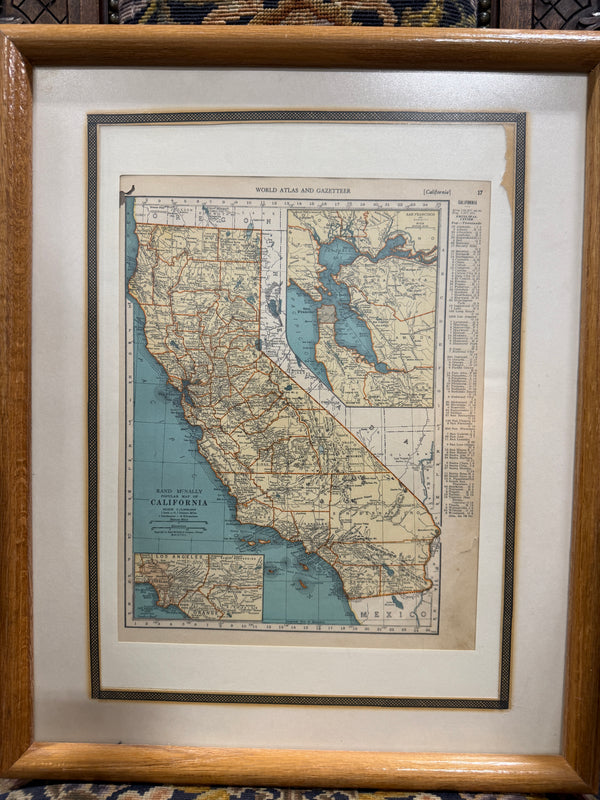
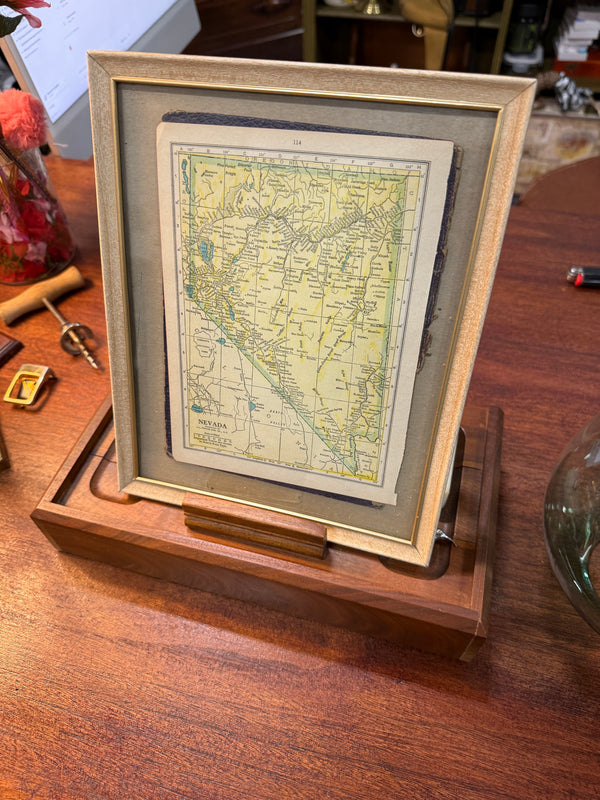
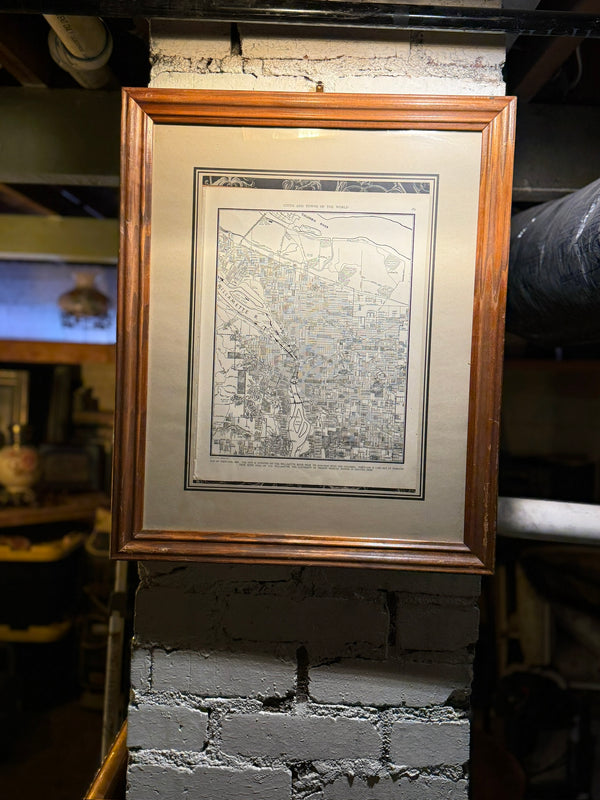
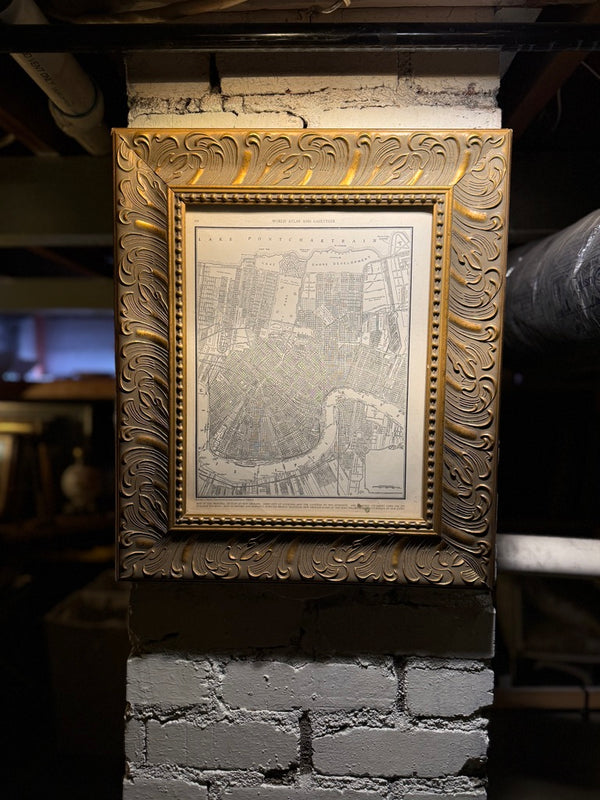
Map of Brooklyn, New York City, from Collier’s Atlas, c. 1939
Viridian Eclection


The Piece A finely detailed 1939 map of Brooklyn, New York City, originally published in Collier’s Atlas, capturing the borough at a pivotal moment just before World War II and the sweeping urban t...
The Piece
A finely detailed 1939 map of Brooklyn, New York City, originally published in Collier’s Atlas, capturing the borough at a pivotal moment just before World War II and the sweeping urban transformations that followed. Rendered with extraordinary density and precision, the map documents Brooklyn’s neighborhoods, street grids, cemeteries, rail lines, industrial corridors, and waterfront infrastructure with an authority that only prewar cartography achieves.
Presented in a restrained black frame with neutral matting, the composition reads as architectural and analytical rather than decorative—an object meant to be studied as much as admired.
Design & Construction
Cartographic Print
→ Publication: Collier’s Atlas
→ Date: 1939
→ Medium: Offset lithographic map on paper
→ Geography: Brooklyn, Borough of New York City
The map reflects early 20th-century American cartographic standards, emphasizing clarity, completeness, and utility. Streets are densely labeled, blocks are tightly organized, and civic landmarks—cemeteries, parks, rail yards, and industrial zones—are clearly delineated.
The East River shoreline, bridges, and transit connections illustrate Brooklyn’s integration into the greater city at a time when infrastructure expansion defined urban identity.
Framing & Presentation
→ Black architectural frame
→ Wide neutral mat providing visual balance
→ Period-appropriate proportions
→ Wall-ready and professionally presented
The framing is intentionally quiet, allowing the complexity of the map to command attention without visual distraction. This is a presentation choice aligned with architectural and design-forward interiors rather than nostalgic décor.
Historical Context
Published in 1939, this map captures Brooklyn on the eve of wartime and postwar redevelopment—before expressways, large-scale housing projects, and mid-century urban renewal altered the borough’s fabric. Many street patterns, industrial sites, and neighborhood boundaries shown here would be reshaped or erased within the following decades.
Maps from Collier’s Atlas were produced for accuracy and reference, not ornament. Their survival today offers a precise snapshot of American urban life at a moment of transition, making them increasingly valued by historians, designers, and collectors alike.
Condition
→ Very good vintage condition
→ Age-appropriate toning consistent with 1930s paper
→ Clear, legible line work throughout
→ No major tears, losses, or alterations observed
→ Frame and mat in clean, stable condition
Any visible wear is honest and consistent with age, contributing to the map’s authenticity rather than detracting from it.
Why It Belongs in Your Home
This is not a decorative map. It is a document.
It brings:
→ Historical authority
→ Visual density and intellectual weight
→ A strong sense of place rooted in real geography
Ideal for libraries, studies, offices, or interiors that favor meaning over ornament, this piece rewards prolonged viewing and quiet curiosity. It appeals to those who understand cities not as aesthetics alone, but as layered systems shaped over time.
Brooklyn, before it was simplified.
Every piece is packed with professional-grade materials: multiple foam layers, double-boxing, directional and fragile handling labels. For large furniture we use custom timber crating. We photograph packing before dispatch and can provide images on request.
White-glove delivery is complimentary within 100 miles of Reno, NV. National shipping quotes provided at checkout. All shipments are photographed and documented. Damage claims must be filed with the carrier; we provide all documentation needed to support your claim.
Local pickup is available at Viridian HQ (Reno, NV) with 2–4 days notice. Contact us to arrange. Private viewings also available.
All antique and vintage items are sold as described and all sales are final. Each listing includes detailed condition notes and photographs so you can make a fully informed decision. We encourage buyers to ask questions — about condition, dimensions, finish, provenance — before purchasing.
Antiques are irreplaceable and one-of-a-kind. Carrier handling is outside our control once a piece has left our facility, and major carriers including FedEx do not insure antiques. We do everything within our power to ensure safe transit, but cannot accept liability for carrier damage. If damage occurs in transit, we will provide full documentation to support your carrier claim.
Have a question? — we're happy to provide additional photos, condition detail, or discuss the piece directly.